
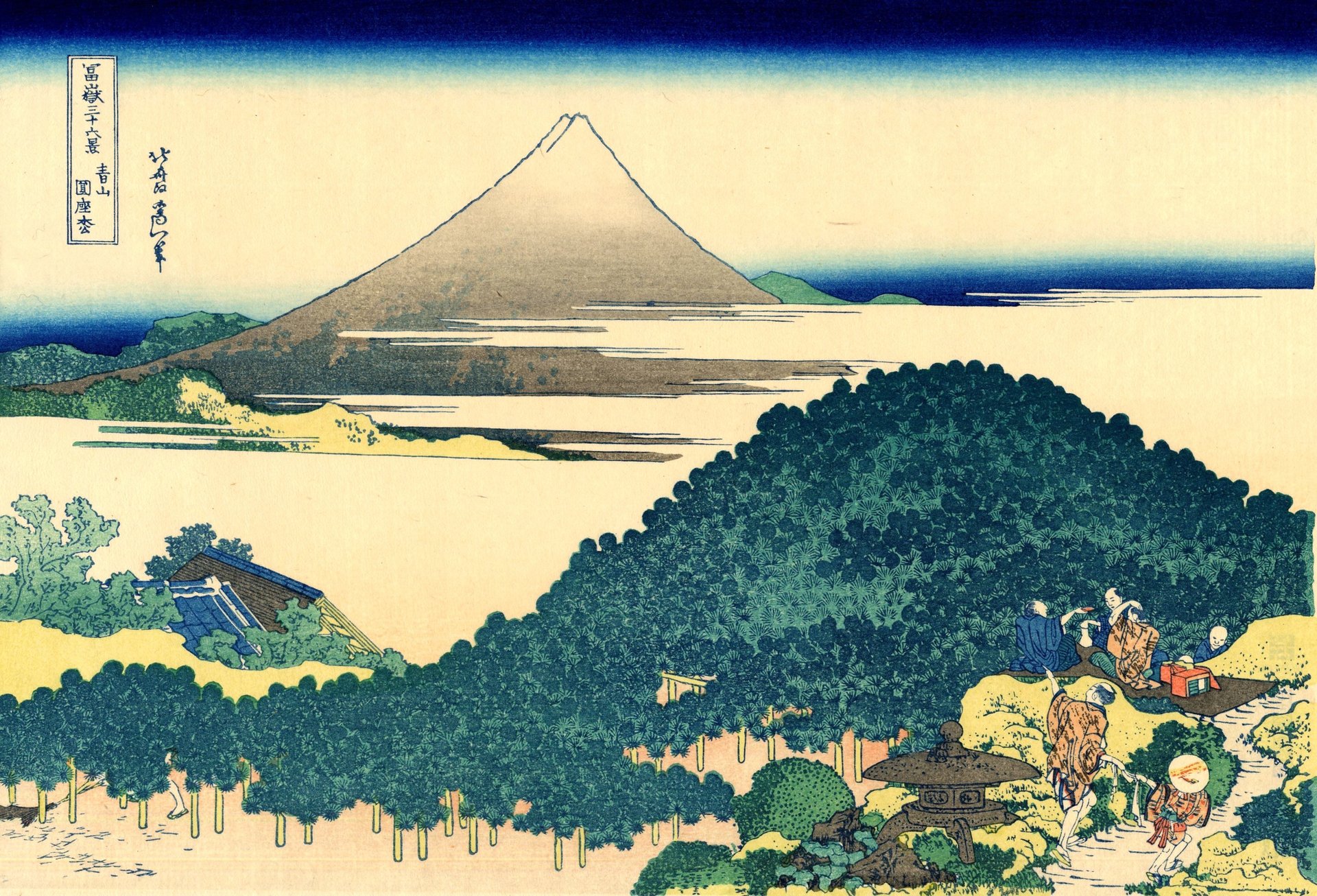
"The Coast of seven leagues in Kamakura", Katsushika Hokusai (1830s) (Public Domain)
Why Katsushika Hokusai's (葛飾北齋) Wood Print here?
We use Katsushika Hokusai's wood print work here as an analogy to what we want to achieve with ViFF.
In the 1830s, almost two hundred years ago, Katsushika Hokusai produced the famous *Ukiyo-e(浮世繪)wood print "Thirty Six Views of Mount Fuji" (富嶽三十六景), depicting Mount Fuji from different places and perspectives. Traditionally, Japanese people view Mount Fuji as a holy mountain, and many placed their hope and faith on it. Mount Fuji is more than a mere mountain or view, it is hope and faith in the Divine.
In "The Great Waves of Kanagawa", Mount Fuji was featured in a quiet background while the fishermen fought for their lives against the roaring waves with calm, dignity, and a belief in the Divinity. In "The Eastern Capital Sundai", villagers were featured carrying on with their daily tasks in a peaceful manner with Mount Fuji as a background. Regardless of where one is located, regardless of one's station in life, regardless of whether it is a peaceful or frightful time, Mount Fuji, the manifestation of men's belief in the Divinity, looks over the people. People have hope because they know that Mount Fuji will always be there for them.
The work of Hokusai ties in with our intention. In a sense, Vision International Film Festival is doing similar work to Hokusai's Ukiyo-e prints - we present the thirty six views of spirituality, humanity, virtues, moral characters, and universal values to people around the world, using films and movies as the art medium. Depending on where the movie is made, the views could be different, the stories could be different, but the central theme of faith in the divinity is the same. We believe that our work helps make our world a peaceful and better place.
*Ukiyo-e, meaning "Paintings of a floating world", is a Japanese art form using woodblock prints and paintings to portray this world that we live in.


"Tea house at Koishikawa. The morning after a snowfall.", Katsushika Hokusai (1830s) (Public Domain)
"Goten Yama hill, Shinagawa on the Tōkaidō", Katsushika Hokusai (ca. 1832) (Public Domain)